
Imagine you are watching a video, surfing the internet or doing your online transactions or tasks. What lies behind these everyday experiences? Hidden giants called data centers that carry the digital world on their shoulders. The data center is the beating heart of the digital world, and the physical infrastructure of the data center, as the foundation and backbone of these hidden giants, plays a vital role in today's world. Without this powerful infrastructure, online services, e-commerce, cloud computing and many other components of today's digital world would not exist.
According to IDC, the amount of data produced in the world will reach 163 zettabytes by 2025. This huge amount of data has created the need for data centers with more capacity and bandwidth, and therefore the fundamental design of a data center infrastructure is very vital and necessary to achieve a stable and efficient data center. It addresses the physical infrastructure of the data center, its key components, the challenges and opportunities it faces, as well as its future outlook.
The physical infrastructure of the data center is the foundation of today's digital world. This infrastructure is a complex set of physical components that provide a secure and stable platform for storing, processing and transmitting data at massive scales. Without this critical infrastructure, online services, e-commerce, cloud computing and many other components of today's digital world would not exist. In fact, everything that is physically placed inside the data center facility or forms the physical structure of this facility is a part of the data center infrastructure.
Based on the type of construction and location, data centers are divided into different types such as ground, underground (underwater) and modular. Choosing the right place for the data center is very important. Factors such as access to electricity and water sources, sustainability of facilities against natural disasters, security and local laws play a role in choosing the right location.
Ground data centers are the most common type of facility located inside a company or organization, while underground data centers have advantages such as greater security and resilience against natural disasters. Modular data centers also provide a flexible and scalable solution for changing needs.
Stable, uninterruptible and fluctuating electricity is the vital artery of the data center. The power system of the data center includes equipment such as UPS, generator, power distribution systems, transformers, emergency power systems, etc., which are responsible for supplying the required power to the equipment permanently and without any outages.

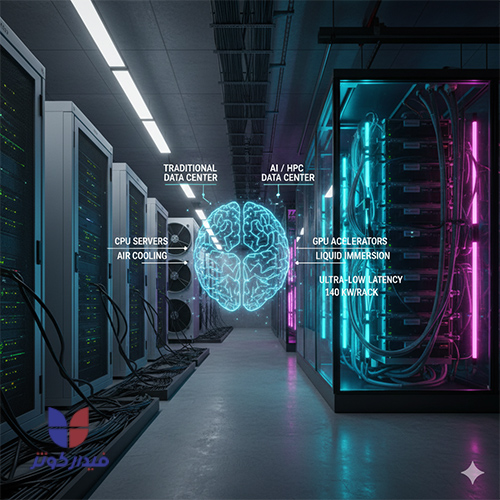
Temperature and humidity control are other vital factors for the proper operation of data center equipment. Cooling systems used in data centers prevent overheating of equipment and technical failures. There are different types of cooling systems, such as air-cooled systems, water-cooled systems, chillers, etc., which are selected according to the conditions and needs of each data center.
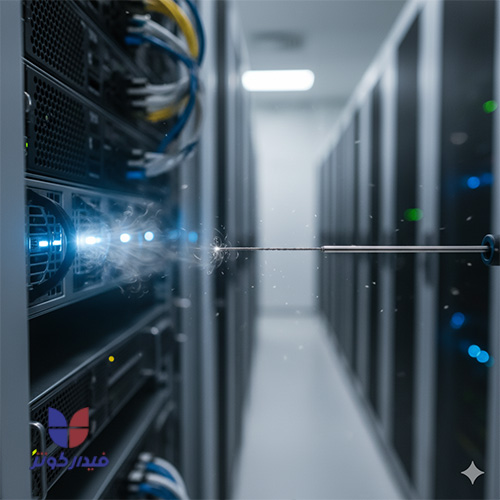
Network and cabling provide the platform for data transmission in the data center. The design and implementation of a high-speed and secure network plays a key role in the efficiency and stability of the data center. Different types of cables and network equipment such as switches, routers, firewalls, etc. are used in data centers.
The physical security of the data center is of great importance to protect information and equipment against physical risks such as theft, fire and natural disasters and cyber risks. Access control systems, closed circuit cameras, fire extinguishing systems and security guards are among the physical security measures.
Also, data center facilities can be divided into two general categories:
Data center infrastructures face many challenges. In particular, if at the time of data center design, the principles of data center design and construction are not paid enough attention, these challenges and problems affected by them can be very harmful. Prevent any possible problems from occurring. In this section, we will examine some of these challenges and solutions to deal with them.
With the ever-growing use of the Internet, the demand for online services and data storage is steadily increasing. This requires increasing the capacity and bandwidth of data centers.
Approach:
Information technology is evolving and data centers must continuously upgrade their equipment to maintain their efficiency and dynamics.
Approach:
Information security and user privacy are among the most important concerns of data centers. They must take the necessary measures to protect users' information from cyber attacks and other security and physical threats.
Approach:

Building and maintaining data centers is very expensive due to the need for advanced equipment and specialized facilities.
Approach:
Data centers, due to high electricity consumption and heat production, can have negative effects on the environment.
Approach:
The physical infrastructure of the data center is moving towards a new, dynamic future and new technologies. In this section, we examine some emerging trends and challenges facing data centers in the future.
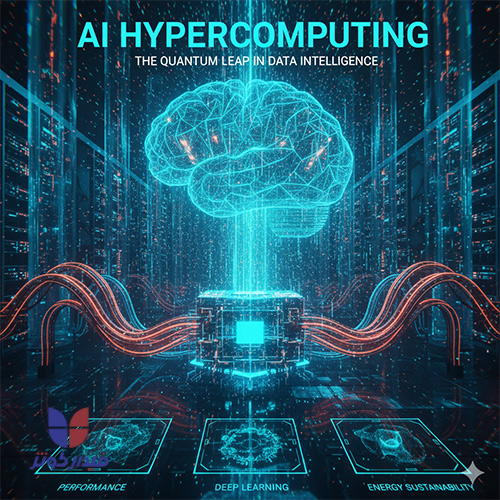
New technologies such as artificial intelligence, blockchain, Internet of Things and 5G technology will play a key role in the future of data center infrastructure. These technologies will bring the need for data center with more capacity, more bandwidth and stronger security.

It is predicted that the physical infrastructure of data centers will move towards greater scalability, flexibility and sustainability in the future. Future data centers will increasingly use artificial intelligence, robotics, and other emerging technologies.
In this article, we examined the physical infrastructure of the data center, its main components, challenges and opportunities facing it. We have seen that data centers play a vital role in today's digital world and face numerous challenges such as increasing demand for capacity and bandwidth, the need for continuous equipment upgrades, security and privacy issues, high construction and maintenance costs, and environmental challenges. Therefore, it is very important to design the data center in principle and based on business needs assessment.
With years of experience, successful projects and a team of expert engineers, Fidar Kowsar can provide everything you need to create a standard, up-to-date data center with uninterrupted operation. Contact us for more information and expert advice
بعد از ورود به حساب کاربری می توانید دیدگاه خود را ثبت کنید